Growth of the HVAC systems market through 2032
June 17, 2026
Workplace safety mandatory also for those working with natural refrigerants
July 14, 2026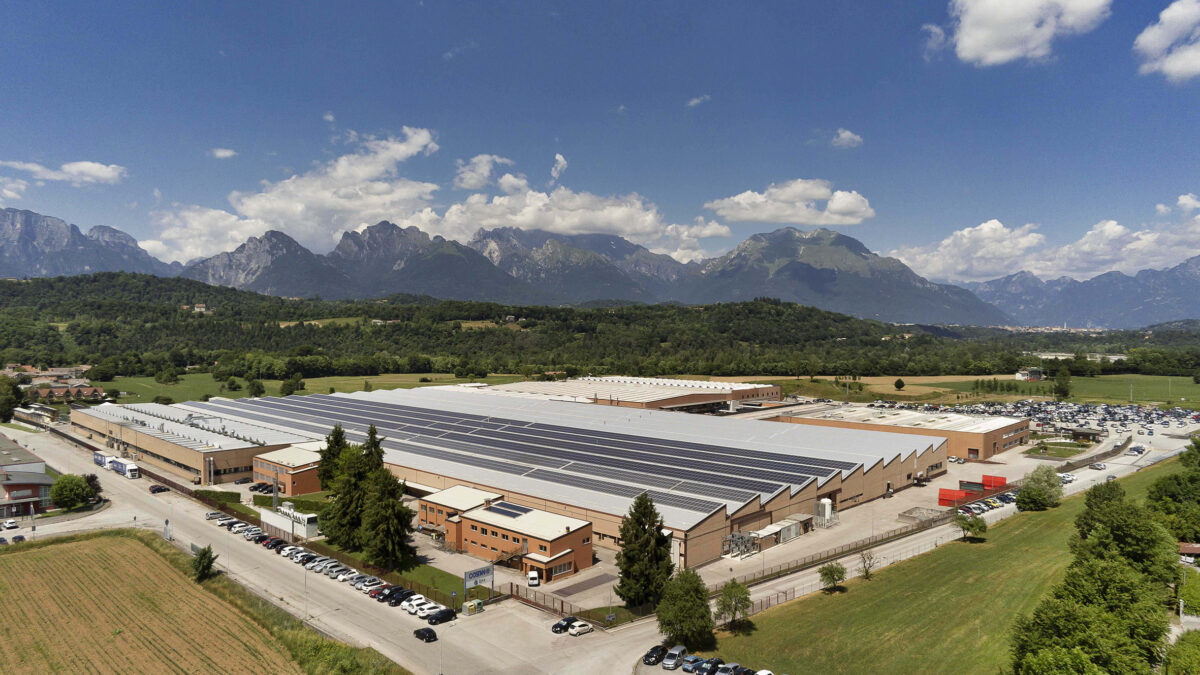
The green transition in commercial refrigeration is being driven by new European regulations, technological innovation, and investment in skills. This is the picture outlined by Epta, a global player in the commercial refrigeration industry, which sees ESG policies as one of the key drivers of competitiveness for the sector in the years ahead.
The HVAC&R industry is currently undergoing a profound regulatory transformation that will reshape the design, manufacturing, and management of equipment throughout its entire lifecycle. Following the entry into force of the European F-Gas Regulation (EU) 2024/573, the sector is now looking ahead to a new wave of EU legislation, including the Ecodesign for Sustainable Products Regulation (ESPR), the forthcoming Circular Economy Act, and the Critical Raw Materials Act, aimed at strengthening the security of critical raw material supplies.
Among the most sensitive issues is the proposed European restriction on PFAS (per- and polyfluoroalkyl substances), commonly known as “forever chemicals,” which also includes numerous synthetic HFC and HFO refrigerants. The proposal, currently in the final stage of scientific assessment by the European Chemicals Agency (ECHA), could further accelerate the phase-out of F-Gases and rapidly influence technological choices across the entire industry.
According to Francesco Mastrapasqua, Institutional Affairs Senior Manager at Epta, European legislation is also changing the way product sustainability is assessed.
“European regulations and environmental declarations are progressively shifting the focus from a purely declarative approach to a system based on transparent, measurable, and comparable environmental performance throughout the entire product lifecycle,” he explains.
For Mastrapasqua, however, the main challenge remains the lack of shared standards for Life Cycle Assessment (LCA).
“It is becoming increasingly strategic to accelerate the definition of common and verifiable criteria, making sustainability a truly objective competitive parameter.”
This is also the direction taken by the guidelines developed by Eurovent, which propose a common technical methodology for Environmental Product Declarations (EPDs).
Sustainability Across the Entire Value Chain
Sustainability, Mastrapasqua notes, is no longer limited to individual companies but now extends across the entire value chain.
“The ESG debate can no longer be confined within company boundaries. Traceability, supplier monitoring, and the assessment of suppliers’ ESG performance are becoming decisive factors from both an industrial and a financial perspective.”
To support this approach, Epta continues to evaluate its suppliers through EcoVadis and has developed, together with Deutsche Bank, a supply chain finance programme designed to reward stronger ESG performance.
On the climate front, the Group joined the Science Based Targets initiative (SBTi) in 2025, establishing a decarbonisation roadmap aligned with the goals of the Paris Agreement.
“Our commitment is to achieve a first major milestone by 2035 and then reach Net Zero by 2050,” says Mastrapasqua.
The company reports that, compared with its 2024 baseline, it had already reduced Scope 1 emissions by 10% and Scope 2 emissions by 38% in 2025. Its target is to cut overall direct and indirect emissions by 63% by 2035 while recycling 97% of the waste it generates.
Another key issue is workforce training, made even more critical by the adoption of natural refrigerants, digitalisation, and the growing use of artificial intelligence.
“The green transition can only succeed by investing in a new set of skills,” Mastrapasqua stresses, noting that the new F-Gas Regulation also introduces specific professional training requirements.
To address this need, Epta has strengthened its international network of Training Centres and launched the new EptaService Academy, starting with a pilot project in Romania dedicated to training service and after-sales technicians.
Looking ahead, the Group believes the industry’s greatest challenge will be integrating refrigeration, data, and artificial intelligence.
“The store of the future will be an intelligent, interconnected, data-driven platform,” Mastrapasqua concludes. “Success will depend on the ability to turn technology into a recurring source of value and transform the store into a smart, efficient, and connected ecosystem.”
The latest developments in industrial and commercial refrigeration, cold-chain logistics, freezing technologies, and cryogenics will be explored at REFRIGERA, the international industry exhibition taking place at BolognaFiere from 10 to 12 November 2027.