Automated Refrigerated Vending Machines: Market Set to Exceed $11 Billion by 2032
July 21, 2026
PFAS in refrigerants: a working group is established in the USA
July 27, 2026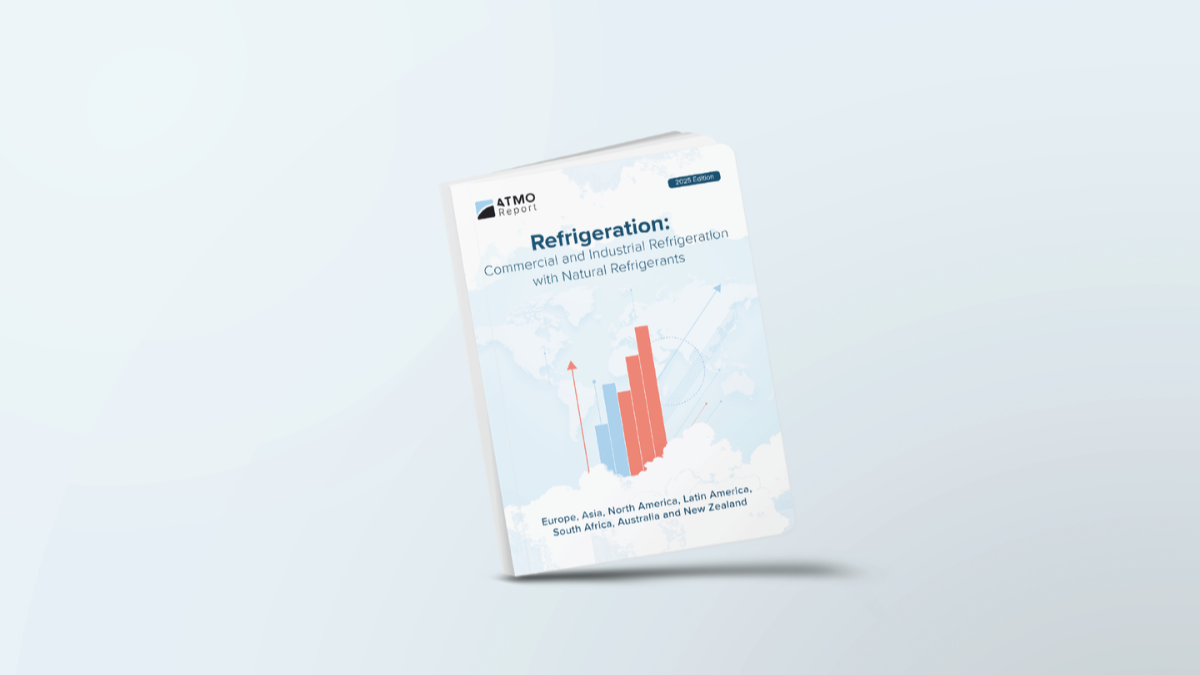
The shift toward low-climate-impact refrigeration solutions is entering a phase of strong consolidation. Driving it above all are natural refrigerants, which are increasingly widespread in the commercial and industrial sectors worldwide. This is confirmed by the latest ATMOsphere report, which captures a rapidly evolving market propelled by stricter environmental regulations and a progressive technological renewal of systems.
The European landscape shows a now-structural growth trend. In 2025, CO₂-based installations in commercial and industrial settings surpassed 111,650, up 16% from the previous year. Of these, roughly 106,000 are food retail outlets, while 5,650 pertain to industrial applications.
The retail sector remains the main engine of adoption: CO₂ penetration in European supermarkets has reached 34%. Both centralized systems, now about 88,000 units (+15%), and condensing-unit solutions, up to 18,000 installations (+24%), are growing.
In parallel, the hydrocarbons segment is also strengthening: plug-in display cases have reached 19.7 million installed units, an increase of 15% year over year. In the industrial segment, CO₂ systems are advancing (+15%) alongside low-charge ammonia, which has reached 4,100 operational sites (+14%).
Regulatory pressure and technology drive change
According to the report, the growth of natural refrigerants is closely tied to the tightening of fluorinated gas regulations and the need to reduce the global warming potential of cooling systems. CO₂, ammonia, and hydrocarbons are progressively replacing traditional solutions in an ever-growing range of applications.
A decisive role is also played by technological progress: more efficient components, simplified architectures, and greater standardization are lowering adoption barriers, making these solutions more accessible even in complex contexts.
Outside Europe, the market shows uneven but expanding dynamics. In North America there are 6,360 CO₂ installations, of which 5,120 are in retail (+25%) and 1,240 in industrial settings (+42%). However, supermarket penetration remains limited, at around 6%. In Japan, total installations have reached 14,930 units, with 17% growth in retail outlets and an overall penetration of 18%, driven mainly by the convenience store format.
In Latin America, there are 840 CO₂ systems, with increases of 22% in commerce and 30% in industry. In parallel, hydrocarbon systems have reached 9.4 million units.
The report also highlights a long-term shift: in Europe, CO₂ installations have grown from a few hundred in 2008 to over 111,000 today, marking the transition from experimental technology to an established solution.
ATMOsphere notes that the sector is entering a mature phase, characterized by broader uptake and increasing standardization of solutions. Analysts suggest this trajectory could strengthen further in the coming years in both retail and industry.
The industrial, commercial, logistics, frozen foods, and cryogenics refrigeration world will gather at REFRIGERA, the sector’s international event, to be held at Bologna Exhibition Center from November 10 to 12, 2027.